
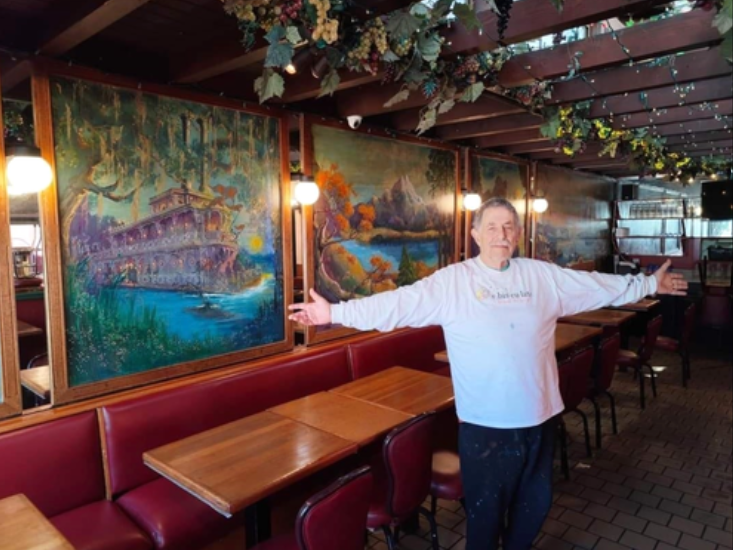
The murals at Grubstake Diner were created by John Jason Phillips and remain one of the most recognizable features of the space. Commissioned in 1976 during an expansion of the diner, Phillips designed the artwork to complement the train car concept, creating a series of panels that together form a continuous narrative known as Coast to Coast.
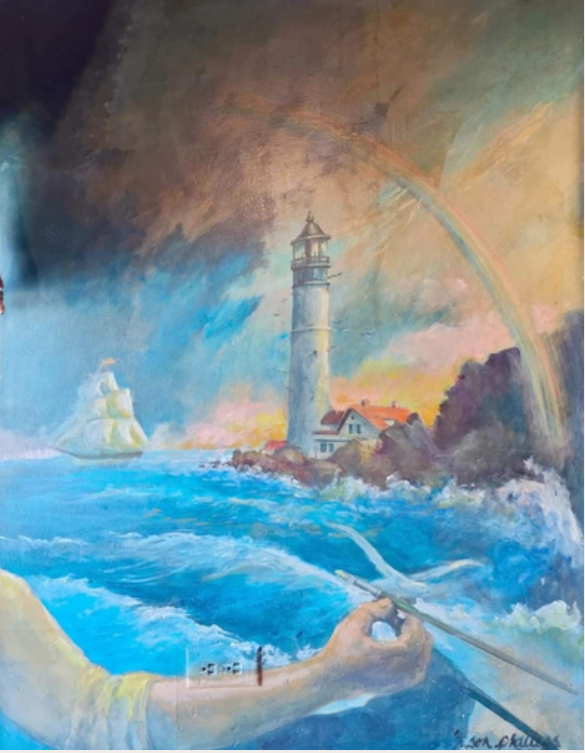
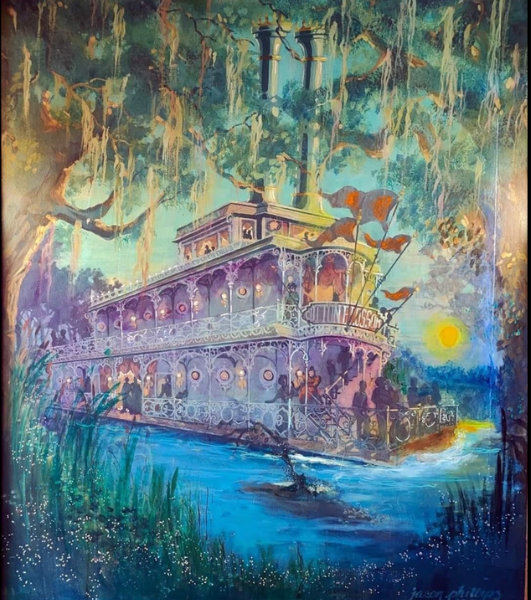
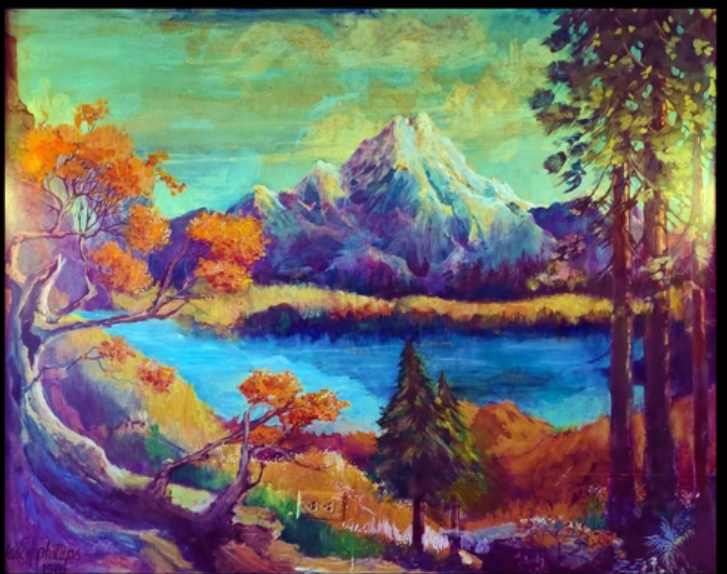
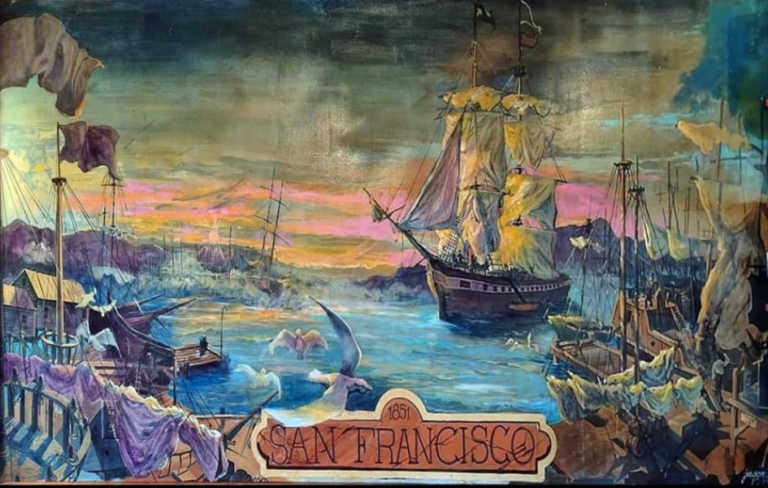
The murals follow a journey from New England to San Francisco during the California Gold Rush, with each panel capturing a different moment along the way. Scenes such as All Aboard in New England, A Showboat on the Mississippi, Colorado Pastoral, Moonlight on the Desert of Utah, and San Francisco Harbor create a sense of movement across the walls and add depth and character to the dining experience.
At the time, Phillips also painted exterior scenes showing a train arriving in San Francisco and passengers stepping onto the platform, though those works are no longer present. Inside, the original murals have remained part of the diner's identity for nearly five decades.
Decades later, Phillips returned to restore the murals himself. Using acrylic glazes and paint markers, he refreshed the color and detail while preserving the original artwork and composition.
Today, the murals continue to add a unique visual layer to the Grubstake experience. They've become part of the backdrop for generations of diners and have appeared everywhere from Guy Fieri's visit for Food Network's Diners, Drive-Ins and Dives to Larry June's music video for The Smooth Kind. Along the way, Grubstake has also been celebrated in the work of San Francisco punk icon Bambi Lake, further connecting the diner to the city's music.
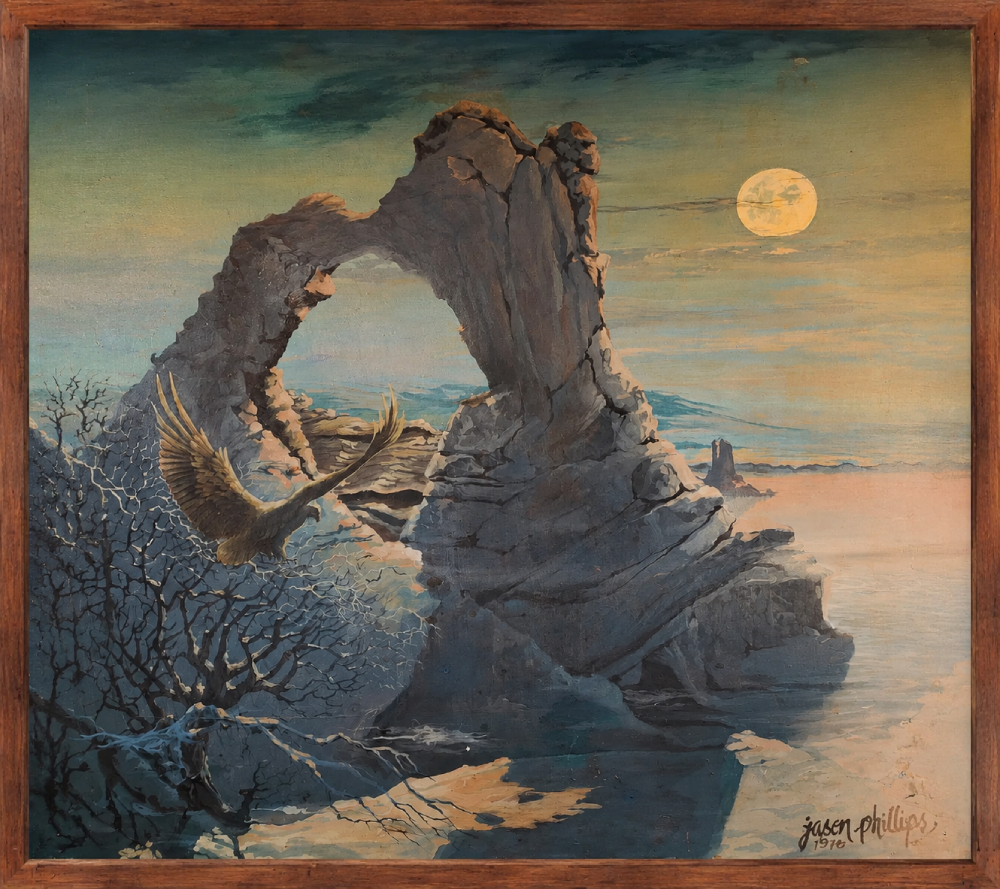
In addition to creating and later restoring the murals, Phillips expanded his creative work into writing during his time back in San Francisco. Inspired in part by his experiences at Grubstake Diner, he published a series of novels exploring travel, movement, and the characters that define city life.
Excerpts from these novels appeared in the San Francisco Bay Times, offering a glimpse into how his visual storytelling carried over into written form. This connection between the murals and the novels adds another layer to Phillips' body of work, with both reflecting a lifelong fascination with storytelling, travel, and San Francisco.